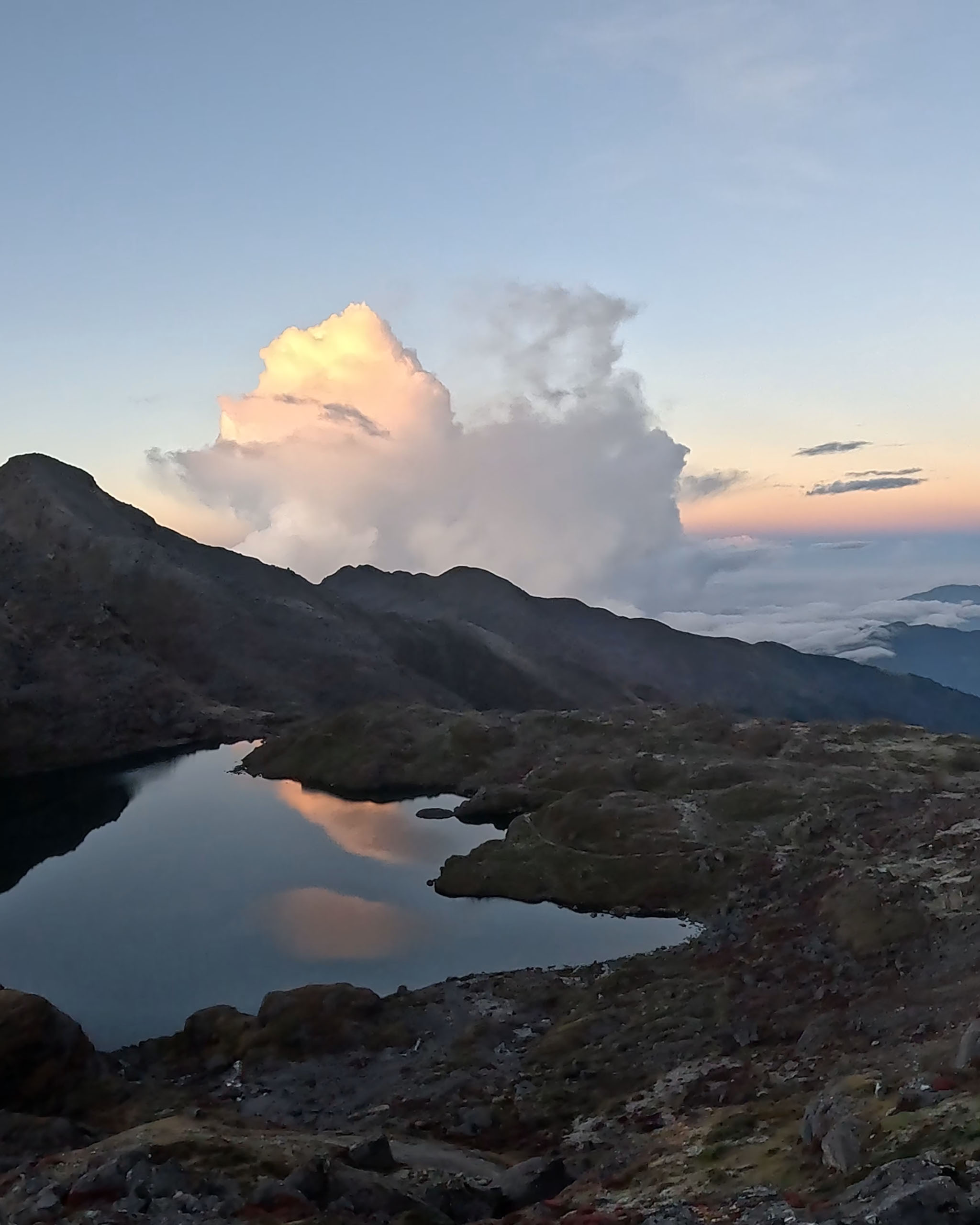

In April 2026 the Langtang community held the eleven-year memorial for the villagers, guides and trekkers killed when Langtang Lirung's ice cliff collapsed onto the old village at 3,430 m on 25 April 2015. Around 300 people died in fifteen seconds. The village was buried under an estimated 40 metres of ice, rock and debris.
By the time you read this in mid-2026, the trail has been rebuilt for a decade. The new Langtang village at Mundu sits slightly downhill of the buried site, in stone-and-timber lodges built with quake-resistant construction. Kyanjin Gompa reopened in autumn 2016. The memorial chorten and the wall of names are the only reason a first-time trekker would know what happened here, and they sit off the standard trail, so you have to walk fifteen minutes uphill from the new village to see them.
Langtang is not a trek that gets talked about in the same breath as Everest Base Camp or the Annapurna Circuit. It should. It's the most accessible high-altitude walk in Nepal from Kathmandu, the second-shortest of the country's major treks, and, since Nepal ended the national TIMS scheme in early 2026, the single simplest permit stack of any trek we book.
What follows is the Langtang Valley Trek as we book it from Kathmandu right now, in July 2026: the road situation to Syabrubesi, the current permit rules, the 7-day itinerary, the real cost including the lines that don't make it onto brochure quotes, and how the post-earthquake trail actually feels to walk today.
What is different about Langtang in 2026
TIMS is fully retired. The Trekkers' Information Management System card ended for all Nepal treks in early 2026 as part of the wider permit consolidation. For Langtang this cuts USD 20 off the solo permit stack and simplifies the check at Dhunche. Any Kathmandu operator still adding a TIMS line to your 2026 Langtang quote is pocketing it.
The licensed guide rule holds. The April 2023 rule requiring a government-registered guide inside every national park and conservation area survived every court challenge through 2025, and the 2026 permit revisions reaffirmed it. Enforcement at the Dhunche park entry checkpost checks the guide's ID card before stamping your permit. Solo trekkers legally cannot walk into Langtang National Park without a licensed guide obtained through a registered trekking agency. Enforcement is stricter here than on some other trails because Dhunche is a single choke-point and every trekker passes through the same office.
The road to Syabrubesi is better than it was. The Kathmandu–Trishuli stretch has been fully paved since 2023, and the Betrawati–Dhunche rebuild after the 2015 quake reached workable condition by autumn 2024. It's still slow, still landslide-prone, and still 7 to 8 hours in a good jeep, but the days of arriving at Syabrubesi at 10 PM after a 12-hour bus ride are largely behind us.
The Montha lesson applies lightly. October 2025's Cyclone Montha closed the Everest and Manaslu high routes for days and reshaped how those trips get booked. Langtang sits farther west of the storm's track and its highest point (5,033 m at Tserko Ri) is a day-hike from a village at 3,870 m, so evacuation options are simpler than a 4,900 m base camp cold night at Gorak Shep. We tightened the Kyanjin Ri summit turn-around to 6:00 AM for late-October trips and we still book straight through to 15 November. That's a smaller adjustment than we made for Everest or Manaslu.
Permit fees held steady. The Langtang National Park Entry Permit stays at NPR 3,000 for foreign nationals through 2026. No fee increases were tabled in the 2026 tourism budget. Assume total permit spend of USD 22 per trekker, the simplest permit line in Nepal.
The 2026 cost, broken open
A fully guided 7-day Langtang Valley Trek booked through a Kathmandu agency on a two-person basis lands at USD 800 to USD 1,100 per person, all-inclusive of the arrival and departure Kathmandu nights, round-trip road transfer to Syabrubesi, permits, guide, porter, teahouse lodging on trail, and standard meals. Solo trekkers add 15 to 20 percent. Groups of four drop to USD 700 to USD 900 per head.
Where the spend actually goes, for a 7-day October trip costed in July 2026:
- Kathmandu–Syabrubesi round-trip road transfer: USD 200 to USD 250 for a private 4WD jeep, split across the group. Two vehicle-days at USD 100 to USD 125 each direction. Public bus is NPR 800 to NPR 1,000 per seat on the express service from Machhapokhari; we don't quote it for autumn departures because a mechanical breakdown on the Betrawati stretch can lose you a trail day.
- Langtang National Park permit: NPR 3,000 (USD 22).
- Licensed guide: USD 25 to USD 28 per day × 7 trail days = USD 175 to USD 196. Langtang-region guides charge slightly less than restricted-area guides because the route is closer to Kathmandu and less remote.
- Porter: USD 20 to USD 22 per day × 7 days = USD 140 to USD 154. One porter carries up to 25 kg for two trekkers. Solo travellers hire a porter-guide combo, saving about 15 percent on the two-role split.
- Teahouse lodging on trail: NPR 300 to NPR 800 per room per night, free at most lodges when you take all meals in-house. Budget USD 30 to USD 50 across the trek.
- Meals on trail: NPR 400 to NPR 700 per dish; a dal bhat at Kyanjin Gompa is NPR 650 to NPR 750 in 2026. Budget USD 130 to USD 180 per trekker across the trek.
- Kathmandu hotels: USD 30 to USD 60 per night twin-share for the two arrival and departure nights in Thamel.
- Insurance with helicopter evacuation to 5,500 m: USD 90 to USD 130 for a ten-day trip. World Nomads, Global Rescue, IMG and True Traveller all underwrite this at 5,500 m; Langtang's ceiling of 5,033 m at Tserko Ri doesn't need the more expensive 6,000 m Everest-region policy.
What is not in any package quote, so pad your budget by USD 100 to USD 180 for these:
- Hot showers above Lama Hotel: USD 2 to USD 4 each, gas-heated bucket in most lodges from Ghoda Tabela up.
- Wifi: USD 2 to USD 4 per device per night; the Everest Link cards work in Langtang too but signal is patchy above Mundu.
- Charging: USD 1 to USD 3 per battery above Ghoda Tabela. Bring a 10,000 mAh power bank fully charged from Kathmandu.
- Snacks, chocolate, bottled water: a Snickers at Kyanjin Gompa runs NPR 250; a 1L water bottle costs NPR 150 to NPR 250. Bring chlorine tablets and refill boiled teahouse water (NPR 40 to NPR 80 per litre) to cut this cost in half.
- Kyanjin cheese: the cheese factory at Kyanjin Gompa sells wheels of yak cheese for NPR 1,600 per kg. Almost every trekker buys some to take back to Kathmandu. Genuinely worth it.
- Tip pool: USD 10 to USD 12 per day per guide, USD 7 to USD 9 per day per porter, paid in a sealed envelope on the last Kathmandu night.
Anyone quoting the full guided 7-day trek under USD 600 is skipping the private jeep (proposing the public bus, which we don't recommend for autumn), running the itinerary in 5 days without proper acclimatisation, or paying the guide below the licensed minimum. Walk away.
The 7-day itinerary, standard version
Langtang runs one direction: up the Langtang Khola valley from Syabrubesi to Kyanjin Gompa, with a day-hike to Kyanjin Ri (or Tserko Ri) as the summit day, then back down the same route to Syabrubesi for the jeep home. Every agency in Nepal books it the same way. The routing decision is whether you add the Gosaikunda loop (adds 4 to 5 days) or the Tamang Heritage side loop (adds 3 to 4 days), and whether you climb Kyanjin Ri, Tserko Ri, or both.
Standard 7-day plan we quote for autumn 2026:
- Day 1. Arrive Kathmandu. Briefing at the office, gear check, permit prep.
- Day 2. Kathmandu (1,400 m) → Syabrubesi (1,467 m) by 4WD jeep. 7 to 8 hours on the Trishuli and Bhote Koshi valley road. Arrive by early evening; teahouse night at the trailhead. Ordering a Tamang thakali set at the Hotel Namaste Langtang the first night is a small tradition.
- Day 3. Syabrubesi → Lama Hotel (2,470 m). 5 to 6 hours, 11 km. First real trail day: cross the Bhote Koshi suspension bridge, then climb steadily through subtropical forest along the Langtang Khola. Watch for the grey langur monkey troops between Bamboo and Lama Hotel.
- Day 4. Lama Hotel → Mundu (3,410 m) via Langtang village site. 6 to 7 hours, 13 km. The tree line ends between Ghoda Tabela and the old Langtang village. Fifteen minutes at the memorial chorten on the way through, which is where you actually feel what happened here. Overnight at Mundu, the rebuilt village.
- Day 5. Mundu → Kyanjin Gompa (3,870 m). 3 to 4 hours, 8 km. Short day on purpose for altitude. Afternoon at the Kyanjin cheese factory, established in 1955 by a Swiss aid project, still operating, still the highest cheese producer in Nepal.
- Day 6. Kyanjin Ri (4,773 m) at sunrise. Leave Kyanjin Gompa 5:00 AM by headlamp. Three hours up in the pre-dawn. Sun hits Langtang Lirung (7,227 m) around 7:00 AM; the panorama includes the Langtang Glacier flowing east, Naya Kanga (5,846 m) to the south, and the Tibet border ridgeline to the north. Down in two hours. Back at Kyanjin Gompa for a late breakfast. If you're on the 8-day version, add Tserko Ri (5,033 m) as day 7 acclimatisation follow-up.
- Day 7. Kyanjin Gompa → Lama Hotel (2,470 m). 6 to 7 hours descent. Long knee day.
- Day 8. Lama Hotel → Syabrubesi. 4 to 5 hours descent through the forest. Jeep back to Kathmandu the same afternoon, 7 to 8 hours on the road, arriving in Thamel around 20:00 for a shower and a Roadhouse dinner.
- Day 9. Buffer day in Kathmandu, then international departure.
A one-day buffer in Kathmandu after the scheduled return is strongly recommended. The Kathmandu-to-Syabrubesi road closes after heavy rain and a single monsoon shower at Betrawati can push the drive from 8 hours to 12. A buffer day is the difference between a relaxed last night at Or2K and missing your international flight because a landslide held the jeep up for six hours at Ramche.
What Kyanjin Ri day actually feels like
Everyone asks about Tserko Ri because it's higher. Kyanjin Ri is where most trekkers actually go, and it's the day that matters on this trek.
You leave Kyanjin Gompa at 5:00 AM. Headlamp on. Wind is usually light in the pre-dawn, because the katabatic flow off the Langtang Glacier picks up around sunrise. The path climbs a rounded ridge on the northwest side of the village, first through short scrub and yak pasture, then onto scree. It's not technical. It's not steep by mountaineering standards. At 4,700 m you take fifteen breaths for every step and it feels punishing.
Three hours up. Most groups reach the prayer-flag cairn between 7:00 and 8:00 AM. The sun hits Langtang Lirung's south face at around 7:15 AM in the last week of October, and the light on the ice above 6,500 m turns a colour that photographs don't reproduce. Langtang Lirung sits dead ahead, closer than any 7,000 m peak feels on any other Nepal trek. The Langtang Glacier flows east from the ridge below your feet. To the south, the Naya Kanga wall drops into the Ganja La valley. To the north, the Tibet border ridge, where the peaks are still officially unnamed on Nepali maps.
Wind on the summit runs 15 to 30 km/h on clear autumn mornings. Temperature at sunrise: -5°C to -12°C in October, -10°C to -18°C in November. You'll stay 20 to 45 minutes, and most groups leave when their fingers stop working.
Down in two hours. Late breakfast at Kyanjin Gompa by 10:00 AM. Then the choice: either climb Tserko Ri (5,033 m) tomorrow as a second acclimatisation day, or start the descent to Lama Hotel and shorten the trek by a day. Roughly a third of our travellers pick Tserko Ri; the rest are ready to walk down.
Three practical points we drill into every Langtang briefing:
- Micro-spikes from late October onwards. The path on the upper section of Kyanjin Ri and Tserko Ri starts collecting hard snow patches from the fourth week of October in most years. A USD 30 pair of Kahtoola or Hillsound micro-spikes weighs 400 grams and prevents a slip that ends the trek.
- Diamox from Lama Hotel if you have altitude history. Acetazolamide at 125 mg twice daily from Lama Hotel onwards is the standard prophylaxis and works well. The gain from Lama Hotel to Kyanjin Gompa in two days is aggressive by classic acclimatisation math. Discuss with your doctor before travel.
- Turn-around protocol. If you're not summit-close on Kyanjin Ri by 8:00 AM, turn back. Guides call this, so listen. The clouds usually build from mid-morning above Kyanjin Gompa and the descent in low visibility becomes a route-finding problem rather than a fitness one.
The eleven-year story, honestly
Some context on why Langtang matters beyond the trekking numbers.
The 2015 Gorkha earthquake killed roughly 9,000 people across Nepal. Langtang was one of the worst-hit single sites: the ice cliff above the village at 3,430 m failed within the first minute of the main shake at 11:56 AM, and the resulting avalanche crossed the valley in about fifteen seconds. Estimates of the dead range from 250 to 350; the exact number is not knowable because bodies were entombed under the debris. What is knowable: around 175 villagers, over 40 foreign trekkers plus their guides and porters, plus visitors staying in the lodges that morning.
The community rebuilt. The Langtang Management and Reconstruction Committee, formed in late 2015, decided to relocate the village slightly downhill to Mundu, outside the direct avalanche fall-line, with lodges built to seismic codes that hadn't existed pre-quake. Kyanjin Gompa's older lodges were structurally repaired and reinforced through 2016. By autumn 2016, the trail was walkable end-to-end. Trekker numbers, which had dropped from around 12,000 per year pre-quake to under 2,000 in 2015, recovered to pre-quake levels by 2019 and have held roughly steady since.
What you'll see on the trek today: the memorial chorten fifteen minutes uphill from the new Langtang village, the wall of names of the dead (including the foreign trekkers), and the visible boulder-field where the old village used to stand. What you won't see: any commercial interpretation of the disaster on the standard trail. The community has been careful about turning the memorial into a tourist stop. If you want to spend time there, ask your guide, and most will walk you up quietly, tell you what happened, and leave you alone with it for a while.
Langtang vs Everest View vs Poon Hill vs Mardi Himal
The four short Nepal treks travellers compare when they have 7 to 10 days. Straight comparison.
Langtang Valley (7 days, USD 800 to USD 1,100): The highest of the four. Kyanjin Ri at 4,773 m or Tserko Ri at 5,033 m gives a genuine high-altitude experience. Road access, no domestic flight required, the biggest single practical advantage. Trail infrastructure is good, but lodge density above Lama Hotel is lower than the Annapurna region trails. Best for travellers who want real altitude and a Kathmandu-based itinerary.
Everest View short trek (5–6 days, USD 900 to USD 1,200): For travellers with only a week. Fly in to Lukla, walk to Namche and up to Everest View Hotel (3,880 m), rest day at Namche, walk down. Max altitude 3,880 m, so no serious altitude risk. Real view of Everest, Ama Dablam and the Khumbu valley. Requires a Lukla flight, which is the biggest risk factor on the trip. Costs about the same as Langtang, delivers a smaller altitude experience with the household-name Everest view.
Poon Hill (5 days, USD 550 to USD 750): The classic beginner's Nepal trek. Ghorepani at 2,860 m, Poon Hill sunrise at 3,210 m for the Dhaulagiri and Annapurna panorama, back down. Lodges are the best of any Nepal trek: hot showers everywhere, wifi almost universal, private rooms with attached bathrooms in the newer lodges. Zero altitude risk. Best for families with older parents or kids, or first-time travellers testing whether Nepal trekking suits them. Not a high trek; if you want altitude, look elsewhere.
Mardi Himal (5 days, USD 700 to USD 900): The middle option. Trailhead near Pokhara, up to Mardi Himal High Camp (3,580 m) and the Upper Viewpoint (4,200 m) for close views of Machhapuchhre and the Annapurna south face. Quieter than Poon Hill, more altitude, requires a bit more fitness. Best for repeat travellers who did Poon Hill on their last trip and want something with more edge.
The short honest ranking we give to inquiries: if you want the biggest mountain experience for the days available, Langtang. If you want the safest first trek with no altitude risk, Poon Hill. If you want the Everest view for the trip photos, Everest View. If you want the quiet trail with a real viewpoint, Mardi Himal.
Who should book Langtang in autumn 2026
We book Langtang for travellers who have:
- 10 to 12 days of clear holiday including buffer
- Reasonable cardiovascular fitness, meaning 8 weeks of hill training before arrival
- Any prior multi-day walking experience (any country, any altitude)
- Comfort with basic teahouse lodging (shared bathrooms, cold rooms above 3,000 m)
- Preference for a Kathmandu-based itinerary that doesn't require a Pokhara or Lukla flight
We steer travellers away from Langtang when:
- The trip constraint is 'I want to see Everest', because Langtang's peaks are stunning but don't include Everest at all
- Total trip time is under 9 days including international flights
- Travelling with children under 8, because the road day to Syabrubesi is long and hard for young kids
- Cardiac condition without a doctor sign-off for trekking above 4,500 m
- Booking dates fall between 15 June and 5 September, because monsoon on the road and the lower trail is genuinely miserable
Send us your prior trekking history when you write in. We'll tell you honestly whether Langtang is the right call for the timeline and fitness you have, or whether a different route fits better.
Booking workflow from Kathmandu
The process we run for a 2026 autumn Langtang trek:
1. Inquiry → costed proposal in 24 hours. Include preferred dates, group size, prior trekking history and any altitude experience. We send a written proposal with itinerary, budget line-by-line, and the named guide profile.
2. 20% deposit confirms. Private jeep to Syabrubesi booked in advance for autumn slots; the reliable operators fill up two weeks ahead.
3. Permit documents. Passport scan, Nepal visa scan (issued on arrival or in advance), and proof of insurance with helicopter evacuation cover to 5,500 m. Insurance letter must state the altitude limit in writing, and insurers who won't put a number down are not usable.
4. Kathmandu briefing day before departure. Final gear check with the guide, route walkthrough, weather briefing.
5. Trek runs. Daily check-in to the office via the guide's InReach or lodge wifi. Road delays absorbed by the office; we hold the Kathmandu hotel if a landslide pushes the return by a day.
6. Syabrubesi return and Kathmandu evening. Tip envelope handed at the final Kyanjin or Lama Hotel dinner. Hot shower and dinner in Thamel the same evening you exit the trail.
If you're reading this in July 2026 with autumn dates in mind, write to us this month, because the private jeep operators to Syabrubesi fill up for the first two weeks of October by mid-August most years. Spring 2027 booking window opens in November 2026.
Langtang is the trek we recommend most often to travellers who want a real Himalayan walk without the Lukla flight, and to travellers who want a shorter first Nepal trek that still crosses 4,700 m. The eleven-year rebuild story is part of what makes it worth doing: a village and a trail that came back from something that could have ended both. Book the middle three weeks of October, budget for the road day either side, take the licensed guide seriously. The rest of the trek looks after itself.